We get asked this more than any other baking question, usually with a photo attached: one tray, twelve cookies, all merged into a single continental landmass.
Flat cookies are almost never a bad recipe. They're a temperature problem, a measuring problem or a patience problem, and all three are fixable. Here's what causes it, in rough order of how often it's the culprit.
Cause 1 of 6
Your butter was too soft
This is the big one. Recipes say "room temperature butter" and people read that as butter that's been sitting on the bench since breakfast, or worse, butter given ten seconds in the microwave.
Properly softened butter should still hold its shape. Press it with a finger and you want a dent, not a hole. If your finger goes straight through, or the butter looks glossy anywhere, it has started to melt, and melted butter can't hold air. No air means no structure, and no structure means the cookie relaxes flat in the oven.
Take butter out 30 to 45 minutes before you bake. It depends on where you live: in an Australian summer that might be 15 minutes.
Cause 2 of 6
You didn't chill the dough
Cold dough spreads slowly. Warm dough spreads fast, and by the time the edges set, the middle has already gone.
Chilling does two things. It firms the fat so the cookie holds its shape long enough for the structure to set, and it gives the flour time to hydrate, which deepens the flavour and improves the texture. A rested dough tastes noticeably better than a freshly mixed one.
Minimum one hour in the fridge, three hours preferred, overnight is better. Roll your dough balls first and chill those, as more surface area cools faster. Then go straight from the fridge into a hot oven, not out on the bench while the oven preheats.
Cause 3 of 6
Your flour measurement is off
If you're measuring flour in cups, you're guessing. A cup of flour scooped straight from the bag can weigh 30 grams more than a cup spooned in and levelled, and 30 grams is the difference between a thick cookie and a puddle.
Use a kitchen scale. Every recipe on this site is written in grams for exactly this reason. A $15 scale is the single best thing you can buy for your baking.

Cause 4 of 6
Your oven isn't as hot as it says
Domestic ovens lie. Most run 10 to 20 degrees off, and plenty are worse. A cool oven gives the cookie more time to spread before the edges set, so you get a thin, pale, crisp cookie instead of a set edge and a soft middle.
If your oven runs hot instead, drop the temperature by 5 to 10 degrees rather than shortening the bake. You want the outside to set before the inside cooks through.
Buy an oven thermometer. They're about $10 and they'll tell you the truth in five minutes. Then preheat properly: a full 20 minutes after the light goes off, not the moment it does.
Cause 5 of 6
You overmixed after adding the flour
Every second of mixing after the flour goes in develops gluten. A bit of gluten is structure. A lot is tough, and dough that's been worked hard also warms up, which takes you straight back to problem one.
Mix until the last streak of flour disappears, then stop. Fold the chocolate in by hand with a spatula. It takes twenty seconds longer and it's worth it.
Cause 6 of 6
Your tray was warm
Putting dough on a tray that's just come out of the oven starts melting the butter before the cookie is anywhere near set.
Use two trays and rotate them, or run the hot one under cold water and dry it. And don't grease the tray: baking paper only, because grease encourages spread.
Beyond the fixes
How to get a bakery-thick cookie
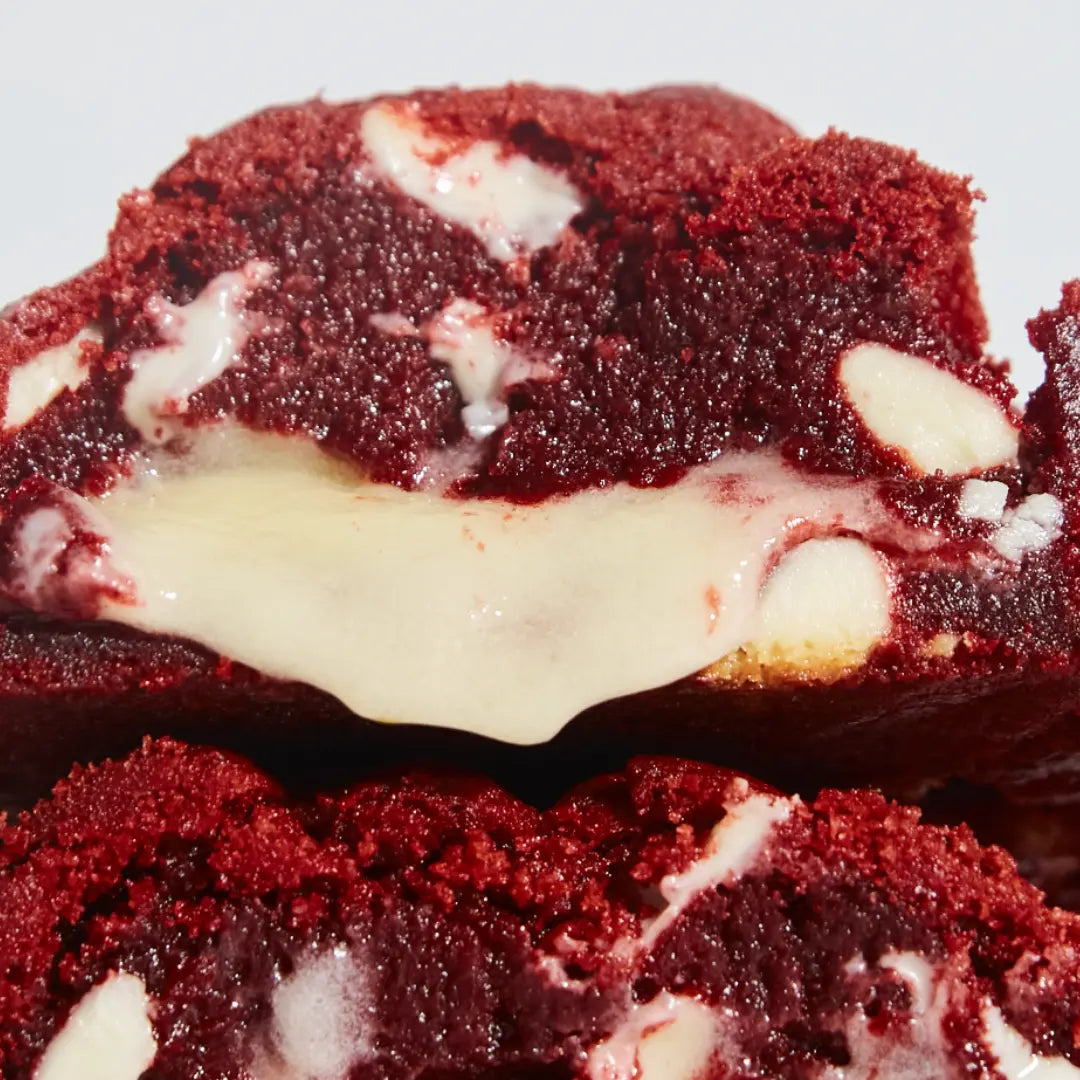
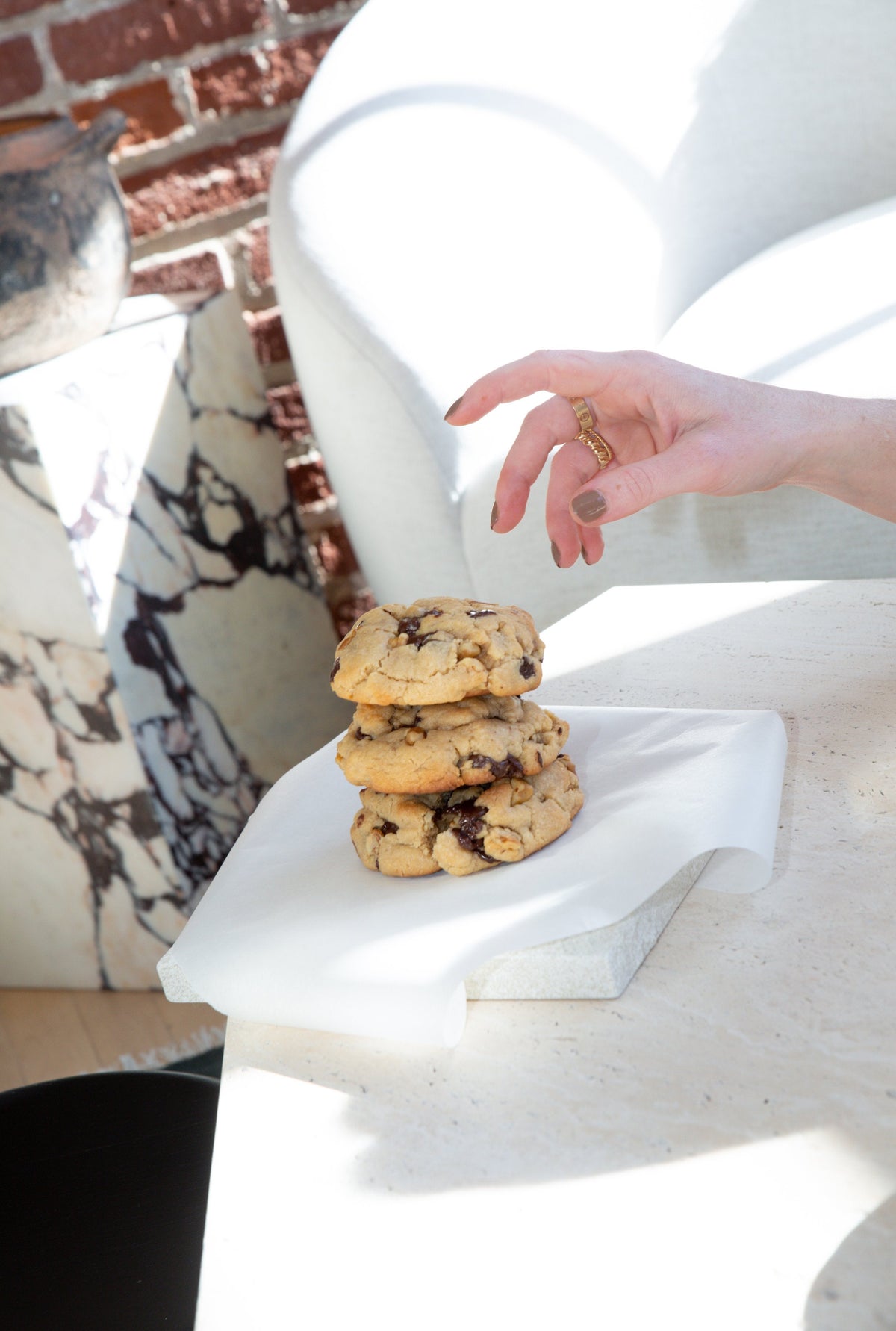
Fixing the faults above gets you a normal cookie. A bakery cookie, taller than it is wide with a set edge and a molten middle, takes a few deliberate choices.
-
Go bigger.
Our cookies are 145 grams each, roughly three times a standard home dough ball. Mass is what keeps the middle gooey while the outside sets. A 40 gram cookie physically can't do this. If you take nothing else from this article, take this one.
-
Build up, not out.
Don't roll a smooth sphere and flatten it. Shape a tall, slightly craggy mound and leave the surface rough. At Brooki we never roll our dough: we weigh it, push it together and it goes straight into the fridge or freezer.
-
Hot and fast.
A high oven temperature for a shorter time sets the outside before the centre cooks through. That contrast, crisp edge and soft middle, is the whole point of this style of cookie.
-
Underbake on purpose.
Pull them when the edges are golden and the centre still looks slightly underdone and puffed. It will look wrong. Trust it. The cookie keeps cooking on the tray from residual heat.
-
Leave them alone.
Ten minutes on the tray before you move them. A hot cookie has no structure yet and will break if you touch it.
Want to put it into practice? Start with our Classic Choc Chip Cookies, straight from Bake with Brooki.

Quick answers
Should I use baking powder or baking soda?
They do different jobs. Soda spreads and browns, powder lifts. If your cookies are flat and very dark, you may have too much soda. Follow the recipe rather than substituting: they aren't interchangeable, and soda is roughly three times as strong.
Can I freeze cookie dough?
Yes, and you should. Roll the balls, freeze them solid on a tray, then bag them for up to 3 months. Bake from frozen and add a few minutes. Frozen dough spreads less, so it genuinely improves the result.
Why are my cookies cakey instead of chewy?
Usually too much flour, too much egg or too much baking powder. Cakey is the opposite failure to flat, and so is the fix: measure by weight and check you haven't added an extra egg.
How long do cookies stay fresh?
A home batch keeps for 5 to 7 days in an airtight container at room temperature. Ours are best within two weeks because of how they're sealed. Never store cookies in the fridge; it dries them out faster than the bench does.
How do I get the gooey middle back the next day?
Fifteen seconds in the microwave. It's what we tell every customer, and it works on any cookie, not just ours.
Or let us do it
Skip the thermometer and the overnight chill. Our Signature Cookie Box is six 145g best sellers, baked fresh and sent express anywhere in Australia. And there are 100 tested recipes in Bake with Brooki.
Written by Brooke Bellamy, who has made her fair share of flat cookies to write this. We've all been there!